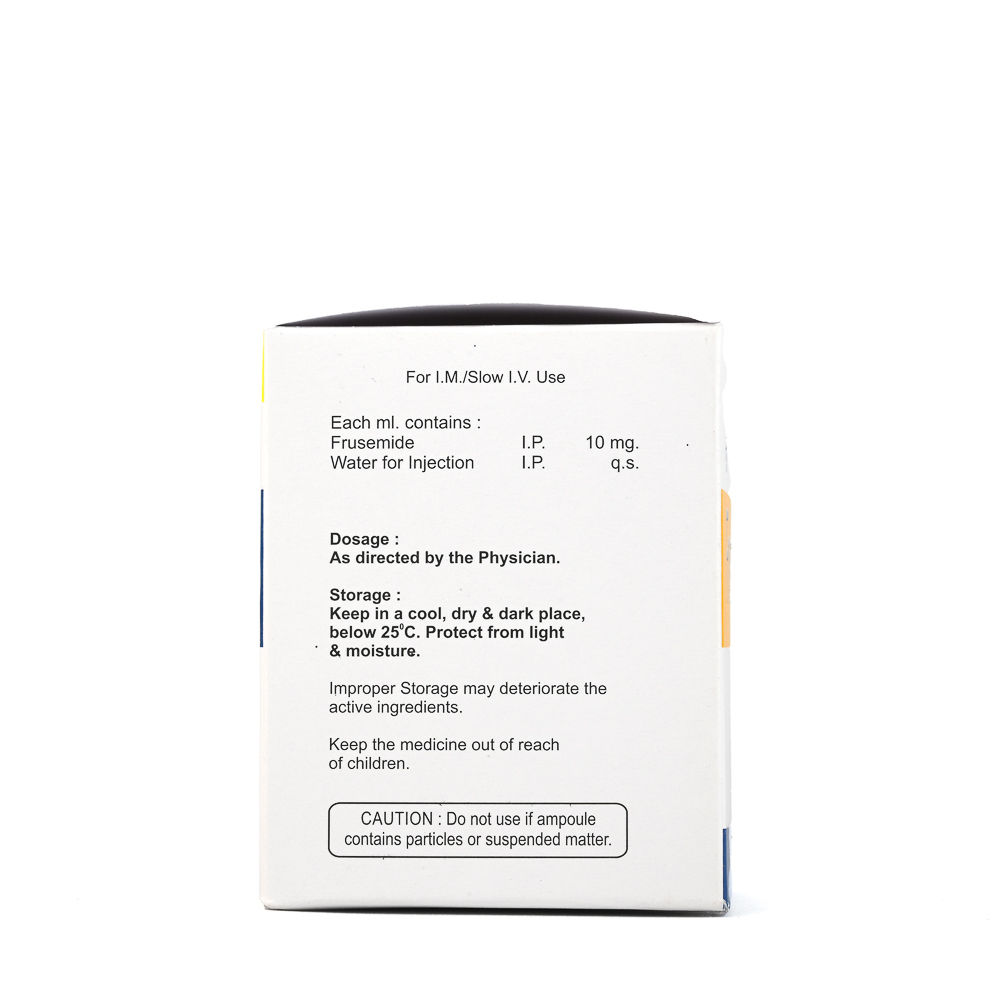
About Frusemide Injection
We are a renowned organization, which is engaged in manufacturing Frusemide Injection 2ml
Product details
|
Composition
|
Frusemide
|
|
Product Type
|
Finished Product
|
|
Packaging Type
|
Ampoule
|
|
Form
|
Injection
|
|
Brand
|
Frusecure
|
|
Packaging Size
|
50 x 2 ml
|
Therapeutic Benefits and IndicationsFrusemide Injection provides powerful diuretic effects. It helps manage edema related to congestive heart failure, liver cirrhosis, and renal disease, and can rapidly relieve symptoms associated with fluid overload. The medication is also suitable for addressing acute pulmonary edema and controlling hypertension, based on physician assessment.
Proper Administration and DosageThis injection is administered by a healthcare professional, either via intravenous or intramuscular routes. Dosage typically ranges from 20 to 40 mg, tailored to the patients condition and age. Always follow your doctors instructions regarding dosage and frequency to optimize therapeutic outcomes while minimizing risks.
Safety Guidelines and MonitoringUse of Frusemide Injection necessitates close monitoring of renal function, electrolytes, and fluid status. Potential side effects include hypotension, dehydration, and electrolyte imbalance. It is essential to avoid use in patients with anuria, severe electrolyte depletion, or known hypersensitivity to frusemide. Only use under prescription and regular medical supervision.
FAQs of Frusemide Injection:
Q: How is Frusemide Injection administered?
A: Frusemide Injection is delivered either intravenously (IV) or intramuscularly (IM) by a healthcare professional. The dose and route depend on individual patient needs and clinical guidance.
Q: What conditions is Frusemide Injection recommended for?
A: It is indicated for managing edema associated with congestive heart failure, liver cirrhosis, and renal disorders. It is also used in cases of acute pulmonary edema and certain forms of hypertension, under physician supervision.
Q: When should Frusemide Injection not be used?
A: Avoid using Frusemide Injection in patients with anuria (no urine output), severe electrolyte depletion, or those with hypersensitivity to frusemide or any ingredient in the formulation.
Q: Where can I find the batch number and expiry date of Frusemide Injection?
A: The batch number is printed on the packaging, while the expiry date is printed on both the ampoule and the carton. Always check these details before use to ensure product safety.
Q: What is the process for monitoring safety during treatment with Frusemide Injection?
A: During treatment, doctors routinely monitor your kidney function, electrolyte levels, and fluid status. These checks help reduce the risk of complications such as dehydration and electrolyte imbalance.
Q: What are the common side effects of Frusemide Injection?
A: Possible side effects include hypotension (low blood pressure), dehydration, electrolyte disturbances, and, rarely, ototoxicity (hearing issues). Inform your healthcare provider promptly if any unusual symptoms occur.
Q: What is the primary benefit of using Frusemide Injection?
A: The main benefit is rapid reduction of fluid overload in conditions like heart failure, liver cirrhosis, and renal disease, which helps alleviate swelling and improve respiratory or circulatory function.